Boundaries are limits that you can place upon yourself or others to preserve your safety, security, and emotional energy. Boundaries can be emotional, physical, sexual, time-bound, communication related, or even set in your personal thoughts.


Boundaries are limits that you can place upon yourself or others to preserve your safety, security, and emotional energy. Boundaries can be emotional, physical, sexual, time-bound, communication related, or even set in your personal thoughts.

While I thought I knew what was meant by “coping” with stress or anxiety, I quickly realized that what I had been doing to cope was not a skill at all, and that there is a big difference between healthy and successful ways to cope and unhealthy/unsuccessful ways to cope.

Dissociation is a stress or trauma response. It can be a reaction to overwhelming anxiety, despair, disappointment, anger, pain, or other discomfort that may be present in your life. Dissociation is commonly described as a “mind-body” disconnection.

Borderline personality disorder (BPD) is a common mental health disorder that can drastically impact how you see yourself and others. Because it is a personality disorder, it is different from a mood disorder.

If you’ve found yourself in the place where you know that you need more help and you’ve surrendered to the idea of treatment, you are also probably in a place where you want to experience relief quickly.

Whether it’s a fear, phobia, or stress-inducing objects or situations, what we know is that avoidance of these will only increase the fear and stress associated with them. Can we continue to try our best to avoid everything that stresses us out?

If you’ve been living with anxiety for a while, it may start to feel like you’ve learned to live with it. You have anxiety, but it’s not that bad. You can avoid triggering situations, and the ones you can’t avoid, you’ve found a way to get through.

While there's definitely helpful tools and advice for healthy parenting, there are some very basic principles to establish first. Before you dig into any details on reinforcements, discipline, gentle parenting, setting boundaries, etc, there are some basics that can be extremely helpful in creating a safe and healing environment for your whole family.

When I made the phone call to Solstice Pacific I really had no idea what to expect. I just knew I needed help and someone to guide me through the process.
The patient advocate I spoke to told me there were a few options available to someone like myself. Note: I had never been in a program like this and had only heard these terms for the first time from a therapist the week prior to this phone call.

Whether you realize it or not, you have expectations of yourself and others in your life - at home, at work, in your extended family, from your friends, and even from strangers! For example, when you’re changing lanes while driving, you expect someone to either slow down or speed up so you can merge.

As mentioned in our previous blog “Things We Grieve”, grief is a process that is typically avoided and can unfortunately lead to lasting health issues as a result. And in that blog, we identified things in this life that may need to be grieved that are beyond loss of life or death.
Since we’ve established what we need to grieve in our lives, what do we do next? What is a healthy way to process grief?

You get home from work. You cook dinner. You eat your dinner on the couch while watching your favorite show. You promised yourself you’d only watch one episode, but what’s the harm in watching one more? Next thing you know, you wake up at 1am on the couch, still in your work clothes and totally disoriented

Studies show that daily routine has many benefits for our mental health. Routine can sound boring, but efficient and effective use of time actually creates space in our day to do more of the activities that we consider fun. We talk about routine a lot– and for good reason. It is one of the most important things we can do for our mental health.

Grief is defined as “a natural response to loss” and is typically associated with distress, agony, sorrow, anger, emptiness or yearning. We commonly understand grief in its 5 stages after death: denial, anger, bargaining, depression, and acceptance.

Although it is simple to write a prescription to treat a mental health condition, certain recent research and a rising chorus of voices worried about the explosive growth in the prescription of psychotropic medicines suggest that this may not always be the safest or most successful course for patients, especially for children.

Parents, are you feeling overwhelmed with how your child is struggling in school and at home? Are you seeing an increase in anxiety, meltdowns, destructive behaviors, or simply the inability to focus or process information? Are you gathering more concern about your child’s ability to meet academic goals or graduate on time?

Motherhood is a complex mixture of wonderful, exhausting, and terrifying. Nothing will make you feel more whole yet also very powerless. From conception, pregnancy, labor and delivery, toddler stages, school age, teenage phases, college transitions, to the duration of your child's life, the worry never stops.

Nowadays, especially with COVID, discord among local and international leaders, Monkeypox questions, the war in Ukraine, rising inflation, it's all too easy to become overwhelmed by the pressures of everyday life.
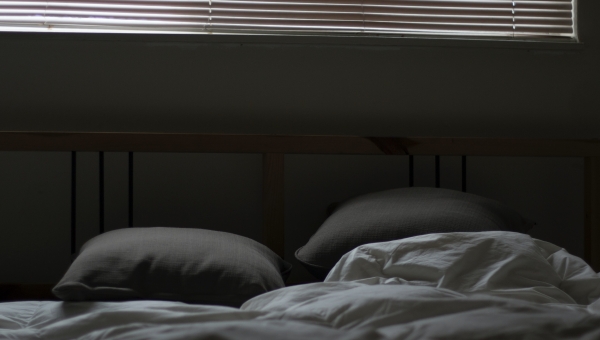
Insufficient sleep has developed into a serious problem in recent years, with serious consequences for human health and wellbeing. According to the CDC, up to 45 percent of people around the world do not get enough sleep, including one in three Americans.

Because of our growing reliance on technology and the rhythms of our more demanding personal and professional responsibilities, it is only natural that we neglect the one time we are truly "inactive," which is when we are asleep.

Empowerment is a buzz word in our society today. Empower is a term frequently used in political circles to motivate certain people groups to act confidently toward a certain cause.